Total: Dhs. 0.00
Taxes and shipping calculated at checkout


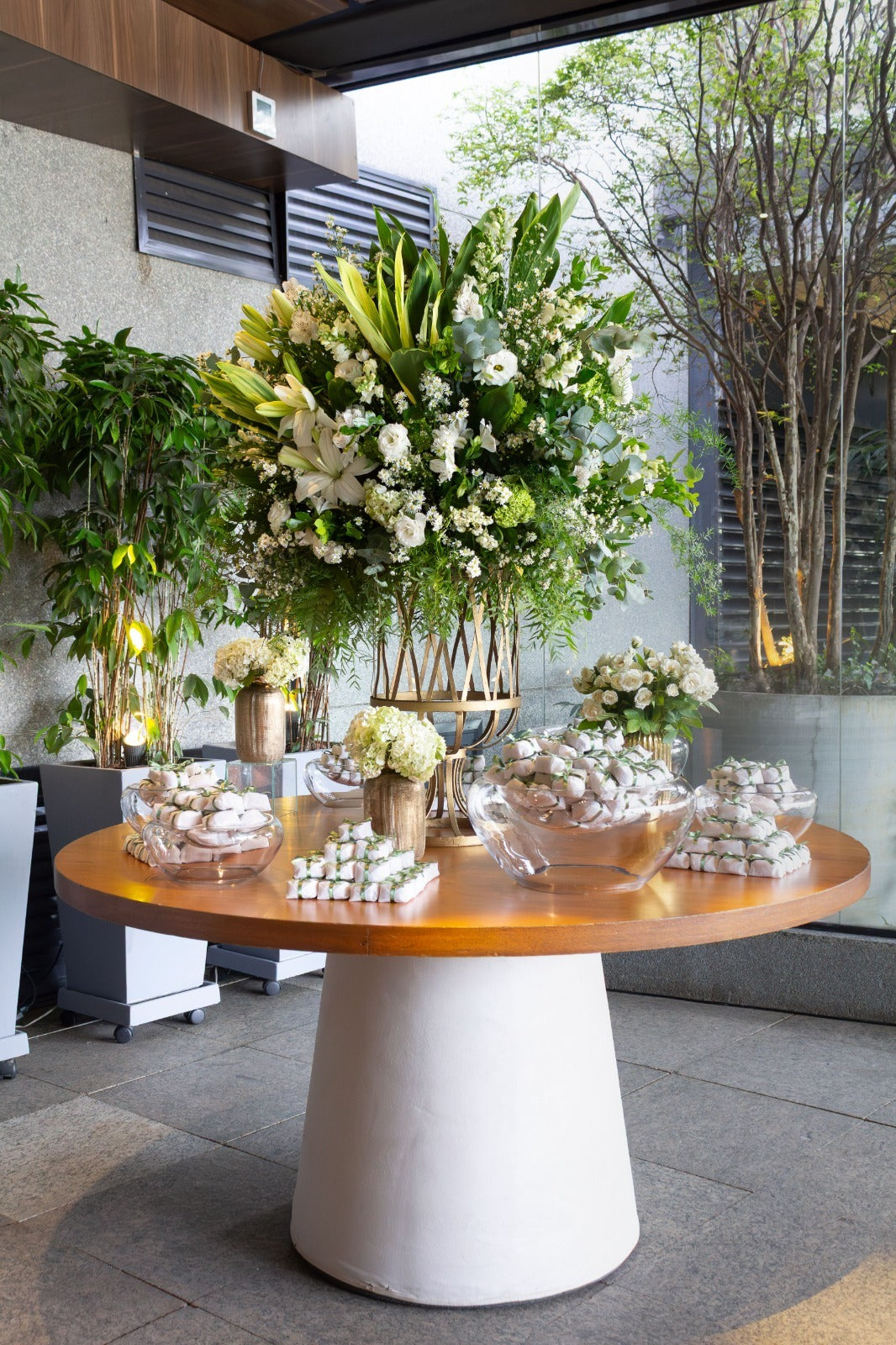
Flowers at a corporate event should serve the event, not simply fill empty corners. An entrance arrangement can signal arrival, a stage display can frame a speaker, and table flowers can make a long conference dinner feel considered. Each has a different job and a different set of practical limits. Planning these roles early makes the final room more coherent and helps the florist give a realistic proposal.
Corporate event floral decor in Dubai also depends on logistics outside the design (when coordinating with hospitality properties, review our guide on ordering flowers for a Dubai hotel venue). Hotels and venues may assign loading windows, require vehicle details, restrict adhesives or permit setup only after another booking ends. An arrangement that looks ideal in a mood board may need a different structure once the team measures a stage edge or checks where guests will walk.
This guide takes an organizer through the planning process: define priorities, survey the venue, brief a florist, review designs and confirm installation and removal. It is relevant to conferences, product launches, awards, client dinners and business celebrations. The details of any particular service, flower selection or installation should be agreed with the florist and venue rather than assumed from a photograph.
Write one sentence describing what the event is meant to do. A leadership conference might need a polished environment that keeps attention on presentations. A launch might need a distinctive arrival and a branded photograph location. A client dinner may prioritize a welcoming table and comfortable conversation. This sentence helps decide where flowers will have the most effect.
Map the guest journey from drop-off or lift lobby to registration, main room, refreshments and exit. Mark where people pause and where they move quickly. Flowers placed where guests stop can be seen and photographed; a large display in a narrow route may create congestion. Ask the venue for a floor plan and walk the site if possible. A plan alone may not show a low ceiling, exposed cable or a door that swings into your proposed display.
Prioritize two or three moments if the budget does not cover every surface. An entrance focal point and considered stage treatment may do more for a conference than a scattering of small arrangements across tables that already hold laptops and programs. For a dinner, table flowers may take priority. These are planning choices; the event's actual purpose should determine the allocation.
The entrance establishes the event's visual tone. A pair of stable arrangements can frame an arrival point, while one well-placed display may be enough in a compact lobby. Keep accessible routes, fire equipment and doors clear. If the registration desk handles queues, badges and scanners, place flowers where they will not obstruct staff or guests reaching across the counter.
Check sightlines from the guest's direction of arrival. A tall design can complement signage if its shape leaves the event name visible. A low design may work better when the sign sits behind the desk. Confirm whether guests will take photographs there, and test how the flowers look under the venue's actual lighting rather than only in daylight.
Stage flowers should frame a speaker or panel, not hide faces, microphones, monitors or sponsor marks. Ask for stage dimensions, screen positions and camera angles. In a hybrid event, a flower cluster that looks small from the room can loom large on a close camera shot. Work with the production team to mark safe positions before florals are built.
There may be a lectern, a row of chairs, an awards podium or moving presenters. Each layout needs its own clearance. A low treatment along the front edge could provide colour but must not block stairs or create a trip hazard. A freestanding arrangement at one side might be easier to install and move. Agree who may reposition pieces if the stage plan changes on the day.
Centerpieces must coexist with place settings, serving dishes, water, menus and conversation. Sit at a sample table and check sightlines. If a flower arrangement blocks the person across from you, shorten it or choose a different form. For a long table, several smaller designs may give more even coverage than one large piece, but allow enough room for food service.
Conference tables often contain laptops and notes; a small floral accent may be all they can hold. A gala dinner table may allow more decorative space, but venue staff still need to serve and clear it. Ask the catering team about their table plan and whether they will place food centrally before committing to centerpiece dimensions.
Flowers can frame a backdrop or give a networking lounge a distinctive point of interest. The backdrop's main brand marks and faces should remain visible in photographs. Confirm camera distance and where people will stand; a display that looks balanced without guests might cover them when several colleagues gather for a group photo.
In a networking zone, use stable pieces beyond the edge of crowded pathways. Guests may carry drinks or bags and move furniture. A floral arrangement that needs constant protection by staff is poorly placed. Discuss access and maintenance with the event team so the area remains usable throughout the program.
A useful brief includes event name, date, venue, guest count, room plan, schedule, budget, brand palette, visual references and the spaces requiring flowers. State which features are essential and which are open to interpretation. “A warm neutral palette, a low centerpiece below seated eye level and no flowers blocking the screen” gives the florist decisions to design around.
Share photographs from the venue visit, including wide views and close views of proposed surfaces. Include measurements for tables, registration counter, stage and display plinths. If the venue supplies vases, confirm their sizes and whether the florist may use them. If branding elements need to be incorporated, ask who provides them and how they may attach to the design.
A mood board helps communicate style, but it is not a construction drawing. A reference photograph may be from another climate, room size or budget. Ask the florist to explain how its scale and shape would translate into your venue. When reviewing a portfolio, look for relevant evidence: photographs showing whole-room context, not only close-ups of flowers. Ask which parts of a previous installation were supplied by that florist and whether the event size or access conditions resemble yours. This helps you assess fit without treating a photograph as a guarantee of an identical result.
A floral interpretation of a brand can be subtle. A few blooms in a related shade, a container finish or a repeated shape may connect with signage without forcing an exact colour match. Flowers are natural materials; precise shades and varieties can change with availability. If exact brand colours are essential, consider using printed materials or lighting for the exact match and letting flowers complement them.
Check the whole environment: backdrop, table linens, chairs, carpet and ambient lighting. A flower palette that looks beautiful against a white sample board may disappear against a similarly coloured stage wall. Deep colours can lose detail in low light. Ask to review the proposed palette in the room or against accurate venue photographs.
Cultural and corporate contexts vary across Dubai. Avoid assuming that one flower colour or traditional meaning fits every guest. Focus on your organization's visual identity, the occasion and the audience's stated preferences. If an event has formal or religious considerations, discuss them with the organizer who knows the context rather than assigning symbolic meaning to flowers on their behalf.
Ask the venue or event manager for an installation guide. Confirm loading access, vehicle registration, lift dimensions, trolleys, delivery hours, waste handling, permitted fixings and the time by which the room must be cleared. If a floral design attaches to a wall, arch, ceiling or stage, it may require specific permissions or structures. Do not assume the florist can use tape, nails or existing rigging.
Measure the route from loading area to final position. A large assembled piece may not pass through a service lift or doorway; it might need to be built in sections. Check the finished arrangement's footprint and height under sprinklers, signs and lighting. The florist and venue should agree on how it stands securely, especially near guest circulation.
For outdoor events, discuss heat, sun, wind and the schedule in detail. Fresh flowers may need shaded holding and a setup time closer to guest arrival. Even indoors, a sunlit glass wall or strong air-conditioning outlet can affect delicate petals. Design and placement should reflect the actual conditions, not simply whether the room is described as “air-conditioned.”
Start with the event schedule, then work backward. Note when the venue releases the room, when staging and AV teams finish, when catering sets tables, when photography begins and when the first guest arrives. Flowers should generally be placed after work that might disturb them, with time left for adjustments and a final check.
Set a delivery and installation window that includes security, unloading, lift travel and movement across the venue. A 30-minute gap between room access and guest arrival may be too tight for anything beyond a small ready-made arrangement. For larger work, ask the florist what can be prepared off-site and what must be installed in place. Agree on a latest completion time, not just an arrival time.
Plan removal too. Who owns the flowers and containers after the event? May guests or staff take arrangements, or must the florist collect hired vessels? The venue may have a strict strike deadline. Clarify which team removes water, floral debris, support structures and packaging. Written answers prevent a beautiful installation from becoming a problem at midnight.
An event floral quote may involve more than stems. Design time, containers, mechanics, preparation, delivery, installation, on-site labor and collection can all affect the price. Ask for a proposal that distinguishes the number of pieces, approximate dimensions, locations and logistics. This makes alternatives easier to compare.
If the first proposal exceeds the budget, ask where reducing scale would least affect the guest experience. Reuse may be possible when the timetable allows it: a welcome arrangement might move to a dinner area after arrivals. That requires a safe transport plan and someone assigned to move it. Do not count on reusing a fragile centerpiece without checking its construction and the timing between spaces.
A modest number of well-positioned pieces can feel more coherent than many tiny, unrelated displays. Ask whether available flower varieties can achieve the desired palette and volume within budget. Avoid requesting exact imported blooms and fixed large dimensions at a price that cannot support them; a florist can suggest alternatives when priorities are clear.
For each arrangement, confirm location, approximate height and width, container style, palette and whether it looks good from one side or all around. Request a simple placement plan for a complex room. Specify which elements are reference images and which details are contractual requirements. Exact flower substitutions should be discussed, particularly if a variety is central to the brand or has a strong fragrance.
Confirm the operational details: delivery address and entrance, contact names, installation window, venue permissions, removal plan and what happens if room access is delayed. Ask who makes decisions on site if the agreed location becomes unavailable. A named organizer and florist contact can resolve changes quickly.
Do not treat a mock-up or portfolio image as a promise of identical flowers and lighting. Ask what is fixed, what may vary and whether photographs of the finished work will be provided or permitted. Businesses with strict brand or publicity rules should also state photo and logo-use permissions in advance.
Before the floral team arrives, the organizer should confirm that access passes, loading instructions and contact numbers are current. Mark approved positions and remove competing equipment. On installation, check safety and function first: clear doors, clear sightlines, stable containers and no water near electronics. Then review colour, scale and the intended camera views.
Walk the guest route once. Look at the entrance from the arrival direction, stand where a speaker will stand and sit at a table. Adjust small issues before photographers or guests arrive. If a piece must be moved during the event, have the assigned team do it rather than asking an unbriefed staff member to lift a heavy water-filled arrangement.
After the event, follow the agreed removal plan. Check that hired vessels and mechanics are accounted for, and communicate any venue damage or spill promptly. Save notes about what worked: centerpiece height, loading time, reception placement and guest photos. These records give the next floral brief a practical starting point.
When discussing business event flowers, send the event date, venue, spaces to decorate, guest count, available setup and removal times, desired palette and budget. Share the floor plan and photographs if you have them. For a larger installation, ask about the scope Kinza Flowers can provide for the specific date and whether a site visit, design proposal or venue coordination is appropriate.
Explore Kinza Flowers' Events page for context, then Contact Us with the brief. For smaller ready-made gifts or separate guest arrangements, the Shop may be relevant. For everyday workplace placement rather than a one-time event, see our office flower arrangements guide.
Start with the event purpose and map where guests pause, gather and move.
Measure entrances, stages and tables before setting the size of floral pieces.
Share a detailed brief with palette, budget, venue rules and essential design requirements.
Allow installation time for security, loading, AV coordination and a final walk-through.
Confirm ownership, removal and container collection before the event begins.
Begin as soon as the venue, event format and main spaces are known, especially when the brief involves large installations or specific flowers. The necessary lead time varies by date, scale, sourcing and venue access. Ask the florist about feasibility before locking in reference images or production schedules.
Prioritize the places most relevant to the event's purpose. A conference may benefit from entrance and stage flowers; a dinner may prioritize guest tables. Walk the guest journey and identify the moments that will be seen or photographed most often.
A florist can work toward a brand palette, but natural flower shades and availability vary. Share reference values or physical samples and identify what must be exact. Printed signs, linens or lighting can carry precise colour while flowers complement it.
They should leave clear seated sightlines and enough room for laptops, notes or service. Test the actual table setup, not an empty room. If a dramatic tall design is desired, place it away from the working surface or ensure it does not block faces and cameras.
Provide the loading entrance, security requirements, lift dimensions when relevant, setup and strike windows, approved fixings, floor plan, on-site contact and restrictions around doors, sprinklers and equipment. Confirm who coordinates with AV and catering teams.
Possibly, if their design, containers and the event schedule support safe transport. Decide who moves them, when the guest route is clear and whether the second location has the right dimensions. Ask the florist to plan for reuse rather than assuming any installed piece can be moved.
Kinza Flowers creates floral arrangements for gifts, spaces and celebrations in Dubai. Explore our Events page, learn more About Us, browse the Shop, or Contact Us with your venue, schedule and design brief for a corporate event.




Subscribe to our newsletter

