Total: Dhs. 0.00
Taxes and shipping calculated at checkout


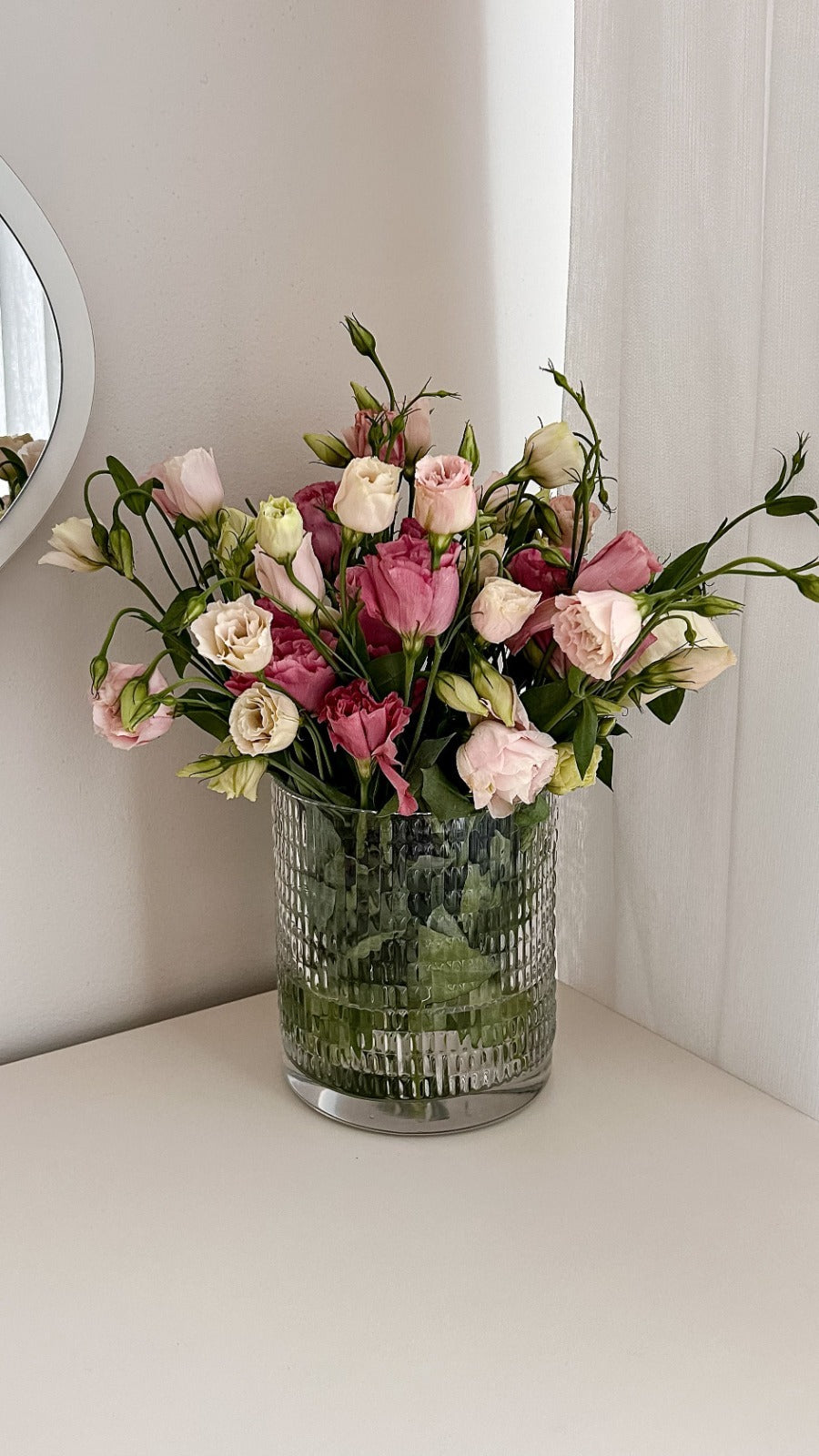
A beautiful bouquet can look awkward in the wrong vase. A narrow neck squeezes its blooms together; a wide opening lets a few stems flop outward; a light base may tip when tall flowers lean to one side. The solution is to match the vessel to the actual stems and the place where you will display them, rather than choosing by colour or style alone.
This flower vase guide gives you practical measurements and simple checks you can make at home. You will learn how to choose vase for bouquet arrangements by judging vase height, opening width, water capacity and stability, then pairing common bouquet shapes with useful vase forms. You do not need specialist equipment: a ruler, a clean vase and a few minutes of observation are enough.
If your flowers arrive in a basket, floral bag or other finished container, follow their own care directions. This guide is for cut stems or a hand-tied bouquet intended for a vase. If you are choosing a vase before ordering flowers, approximate dimensions help, but the final check should happen when you see the actual bouquet.
Set the wrapped bouquet beside a table and look at its overall shape. Is it compact and rounded, tall and upright, or loose with stems reaching in several directions? Count only roughly: a dozen large roses occupy space differently from a dozen narrow, branching stems. The widest flower heads, not simply the number of stems, affect the room you need above the vase.
Measure the usable stem length from the cut ends to where the flower heads begin. If several varieties are mixed, note the shortest stems that must reach the water and the tallest ones you hope to display. A bouquet may be tied at a certain point to preserve its shape. Leave that tie in place initially if it helps you judge how the stems sit together; you can decide whether to remove it after selecting a vessel.
Then think about the display location. A bouquet for a narrow desk, dining table or entrance console faces different limits. Write down the maximum footprint and whether people need to see across it. The best vase for flowers is one that supports the arrangement safely where it will actually stand.
A useful starting range for many hand-tied bouquets is a vase height around one-third to one-half of the total visible stem-and-flower length after trimming. This is a proportion to test, not a florist law. Large, heavy flowers may need more support; airy branches may look better rising from a lower vessel. Hold stems alongside the vase to preview the ratio before cutting anything.
The important measurement is how much stem the vase supports. If only a short section sits inside, tall flowers may lean or fall. If the vase hides most of the stems, the flower heads can look compressed against the rim. The bouquet should have enough visible length to keep its intended shape while its cut ends remain well below the waterline.
Measure the bouquet as it is, then allow for a small fresh cut. Do not buy a vase that works only if you shorten every stem dramatically unless that is the look you want. Once trimmed, a stem cannot be lengthened. If some shorter stems would end above the water, choose a lower vessel or separate them into a companion arrangement.
For a dining table, height has an additional practical test: sit at the table and look across it. A tall vase may make conversation difficult even if its proportions suit the stems. Move the flowers to a sideboard or use a lower container if their heads block sightlines.
The opening controls how stems spread. If the neck is too narrow, the stems bunch tightly and blooms can press against one another. If it is too wide for the number of stems, flowers may fall flat around the rim and leave an empty center. A moderately narrow opening can help a small bouquet stand upright; a generous mixed bunch often needs more room.
You can test an existing vase without unwrapping the flowers fully. Hold the gathered stems just above its mouth. Do they enter without force, with a little space for natural crossing? That is a useful sign. Do not wedge a thick hand-tied bundle into glass or push it through a narrow neck; apart from bruising foliage, the pressure can make the vessel harder to clean and the bouquet difficult to remove.
A quick estimate is to compare the bouquet's gathered stem bundle with the opening. The neck should be wider than the bundle and allow stems to fan into their intended shape. Exact centimetres vary with stem thickness, so use this physical test rather than a universal stem-count chart. If the opening is slightly too wide, keep the original bouquet tie or cross a few stems to create support. If it is far too wide, choose another vase.
Look beyond the lip as well. A flared vase may have a small base and broad mouth, which encourages flowers to spread. A cylinder keeps a straighter silhouette. The internal width where stems meet the water also affects whether they can sit comfortably and be removed for cleaning.
Fill the vase with water and place it on a level surface before adding flowers. Does it feel secure when gently nudged? A tall, narrow vessel made from thin glass can be more vulnerable to tipping when a generous bouquet leans. A broad, weighted base can help, especially for large blooms or stems that extend sideways.
Consider the combined footprint of vase and flowers. A narrow base placed at the edge of a desk is risky even if it appears balanced from the front. Keep the arrangement away from walkways, children and pets who may brush past it. If it sits on a delicate wooden surface, use a suitable coaster or tray and wipe condensation or spills.
A heavy vase is not automatically the best choice. You should be able to lift it safely for water changes. For a very large bouquet, it may be better to divide stems between two stable vases than to overfill one imposing vessel. Stability is a practical feature of the finished display, not simply a property of the empty container.
Cut stems need reliable access to fresh water. A decorative vase with a tiny reservoir may need frequent topping up, particularly when many stems drink from it. If the vase is opaque, you cannot see the waterline from across the room. Make a habit of checking it directly. Shorter stems must reach the water as well as the longest ones.
Think about whether you can wash the inside thoroughly. A wide enough opening for a bottle brush or your hand makes routine cleaning easier. Narrow-necked vessels can be attractive for a few stems, but old residue is harder to remove. A clean container and regular water changes support flower care more effectively than a vase chosen solely for its appearance.
If the bouquet came with flower food, follow its dilution instructions for the amount of water you actually use. Avoid adding extra powder to a small vase. Remove leaves that will sit below the waterline before the stems go in. You can read more practical care advice on Kinza Flowers' Flower Care page.
A straight-sided cylinder supports longer stems and preserves a relatively vertical outline. It can suit classic roses or a mixed bouquet arranged at several heights. Check the diameter carefully: a cylinder with a very wide opening may need more stems than you have, while a narrow one can crush a generous bunch. Clear glass makes the waterline easy to monitor but also shows submerged leaves and cloudy water, which encourages timely care.
A vase that narrows slightly toward the opening can hold stems together while allowing the flowers above to spread. This is often forgiving for a rounded bouquet. Inspect the base and internal shape: stems should reach the water rather than lodge on an inner shoulder. If the mouth is too restrictive, choose another vessel rather than forcing the arrangement through it.
A low bowl or squat vase can work for short stems and table centerpieces. It keeps the display below sightlines and can look generous without great height. Its wide opening offers less natural support, however, so a small handful of tall stems may splay outward. Work with shorter lengths and a broad, stable base; check that all cut ends reach the water.
A bud vase is designed for one flower or a small cluster. It can rescue a short stem from a larger bouquet or display a flower whose shape deserves space. Two or three bud vases grouped together may fit a shelf better than one large arrangement. Check the narrow opening and water level frequently, because the reservoir is usually small.
Ceramic and coloured glass can complement a bouquet's palette or the room. They may also conceal a dense tangle of stems. Their material does not change the basic fit tests: opening, support, water capacity and stability still matter. Check for chips, rough edges or a porous interior unsuitable for holding water; use a watertight liner if the vessel is decorative rather than functional.
A rounded bouquet often looks settled in a vase whose opening supports a gentle dome. A loose garden-style arrangement may benefit from a wider opening that gives stems room to lean naturally. A tall, sculptural design usually needs a heavier vessel with enough height to support its longest stems. An asymmetrical design can be especially demanding: the vase must counterbalance visual weight that extends to one side.
Flower shapes change the calculation. A few large hydrangea heads can fill a broad opening despite a low stem count. Branching spray flowers can create width with relatively few stems. Tall delphinium or other vertical blooms may require more support at the base. When ordering, tell the florist what vase you own, including its height and mouth diameter, if you want advice on scale.
If you are still deciding what shape you want, Kinza Flowers' guide to flower arrangement styles can help you compare rounded, asymmetrical and other formats. Our step-by-step vase arranging guide then shows how to place the stems once you have a suitable vessel.
Place your candidate vase on its intended surface. Measure its height and the inside width of the mouth. Hold the bouquet beside it at the height you would like the flower heads to appear. Imagine how much stem must sit inside after a fresh trim. If that leaves less support than the flowers need, test a taller vase or shorten the design thoughtfully.
Next, hold the stem bundle loosely over the opening. Leave room to lift the flowers in and out for water changes. Rotate the bouquet once to see whether a wide bloom projects much farther than the vessel's base. If so, assess its stability and available surface space. Finally, check how much water the vase holds and whether you can clean it.
For example, imagine a bouquet with stems about 45 cm long and large flower heads. A vase around 20 cm tall might be a useful starting point if its opening supports the bundle and enough stems can sit in water after trimming. A 10 cm bud vase would leave many stems unsupported, while a 40 cm vase could conceal most of them. These numbers illustrate a test, not a guarantee: flower weight and bouquet shape still decide the fit.
If you are buying a vase online, compare dimensions rather than relying on a product image. Confirm the inside mouth width, total height and base width when available. A vase photographed with only a few stems can look larger than it is; a long camera lens can also change the perceived proportions. Measure a current vessel you like as a reference.
If the bouquet spreads too widely, try a vessel with a narrower mouth or leave the hand-tied tie in place if it does not interfere with water access. If the blooms bunch together, move to a wider opening and loosen the stems gently. If the arrangement tips, use a heavier, broader base or reduce the sideways projection by changing stem placement.
If a few stems are too short, place them in a smaller companion vase. If the main bouquet is too large, divide it into two cohesive groups, each with a focal flower and supporting material. Do not cut every stem merely to make an unsuitable vessel work. A second arrangement can make use of your flowers and bring colour to another part of the room.
If a transparent vase shows a messy bundle, remove underwater leaves, recut stems neatly and choose a design that lets stems cross with purpose. You can also use an opaque watertight vessel, provided it passes the cleaning and stability checks. A visible stem structure need not be perfect; it only needs to be healthy, supported and appropriate to the design.
Set the finished bouquet in a comfortable indoor location away from direct sun, cooking heat and strong air-conditioning airflow. This matters in Dubai, where an arrangement near sunlit glass can become warm even in an air-conditioned room. Check the water level each day and refill before the shortest stems are left dry.
Change cloudy water, wash any film from the vase and remove fallen foliage. Recut stems with clean, sharp tools when appropriate. Blooms in a mixed bouquet open and finish at different times; remove individual spent flowers and allow the remaining design to evolve. Follow any variety-specific care directions included with your flowers.
A vase is useful when it makes these small tasks easy. If the arrangement is beautiful but too awkward to lift or wash, you may put off water changes. Practical care is part of choosing the right vessel, alongside its proportions and appearance.
Measure usable stem length and the vase's height before cutting the bouquet.
Choose an opening wider than the gathered stems, with enough support to hold the design.
Test the filled vase for stability, especially with tall or asymmetrical flowers.
Check water capacity, access for cleaning and the shortest stems' reach to the water.
Match the finished display to its location, then maintain clean water and suitable placement.
Compare the bouquet's usable stem length and gathered stem width with the vase's height and inside opening. A vase around one-third to one-half of the intended arrangement height is a starting point for many hand-tied bouquets, but flower weight and design matter. Test the stems beside and above the vessel before trimming.
No. Long stems need support, but a vase that conceals nearly all of them can flatten the design. Choose enough height to keep the flowers upright while leaving the heads and a useful length of stem visible. For a dining table, also check seated sightlines.
It should admit the gathered stems without force and let them spread as intended. A very wide opening can allow a small bunch to fall outward; a narrow one can crush a fuller bouquet. Compare the actual bundle to the mouth rather than relying solely on a stem-count chart.
Yes, if it is watertight, cleanable, stable and deep enough for the stems. Some decorative vessels need a watertight liner. Check the interior and base, not just the exterior design, and protect sensitive furniture from spills.
Choose a wider, stable vase or divide the bouquet between two vessels. Preserve a focal flower and supporting stems in each group. Avoid packing stems tightly or cutting them all drastically to fit a vessel that cannot support the design.
They are generally presented as constructed arrangements rather than loose hand-tied bouquets. Follow the care instructions supplied with that specific design and ask the florist about its water source. Do not dismantle it merely to apply advice meant for cut stems in a vase.
Kinza Flowers creates fresh floral gifts for Dubai homes and celebrations. Explore the Shop, learn more About Us, read our Flower Care guidance, or Contact Us for help matching a bouquet and display space.



Subscribe to our newsletter

