Total: Dhs. 0.00
Taxes and shipping calculated at checkout


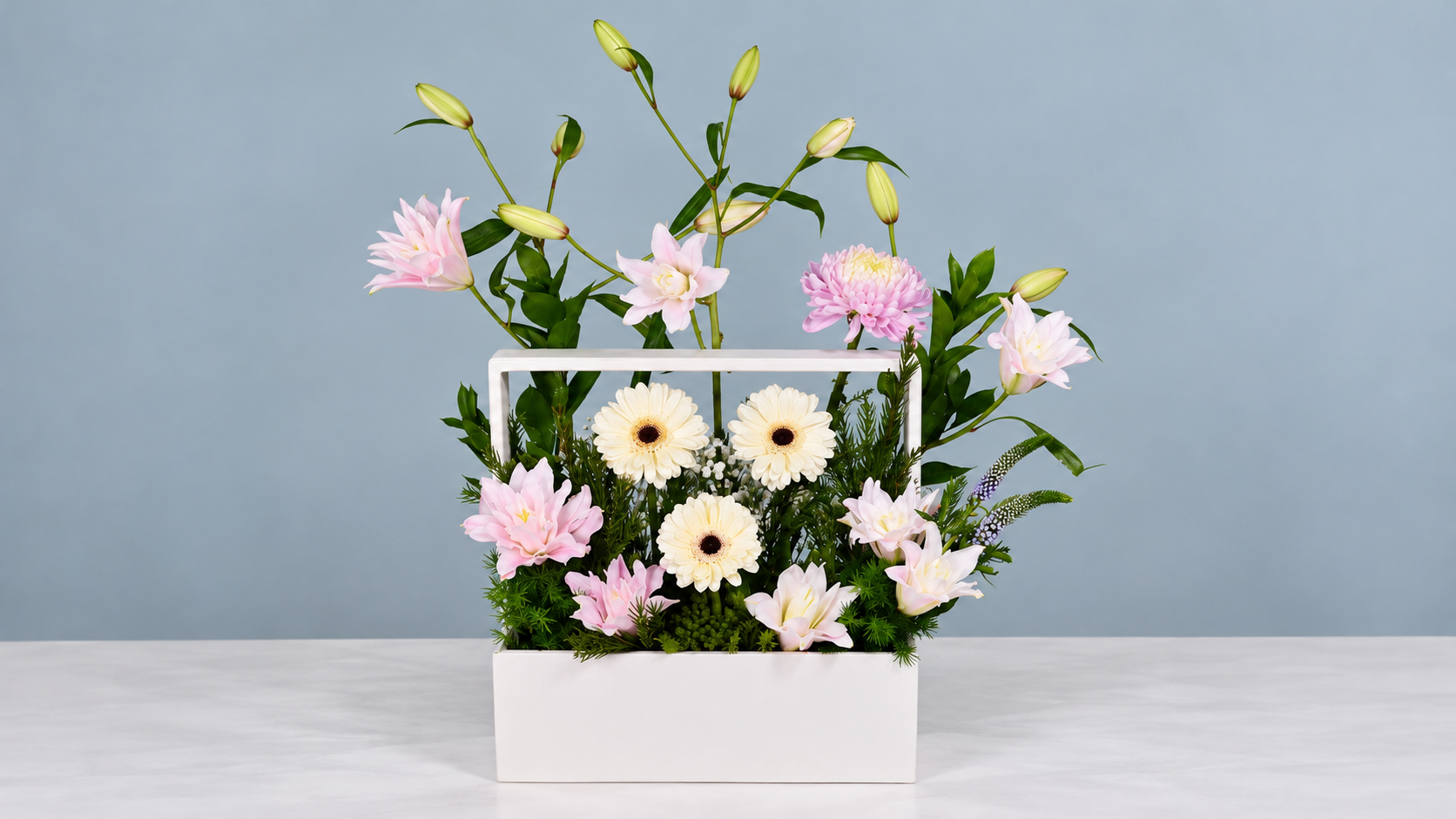
When somebody you care about is in hospital, flowers can be a simple way to say you are thinking of them. A favourite colour, a modest arrangement and a kind card can make the gesture feel personal without requiring a long visit. The most thoughtful gift also fits the patient's wishes and the ward's rules.
Choosing get well soon flowers in Dubai therefore begins with permission, not with a particular bloom. A bouquet welcome in one general ward may be unsuitable in another care area. Fresh flowers, dried flowers and potted plants can all be restricted, and a compact container does not create an exception. Confirm the exact receiving arrangements before ordering.
This guide explains how to choose a practical floral gift, understand common restrictions and coordinate delivery in Dubai. “Healing blooms” describes a caring gesture here, not a medical effect: flowers are not a treatment and should never be presented as improving recovery, reducing symptoms or replacing care.
First, ask the patient or a trusted family contact whether flowers would be welcome. They may love the idea, prefer another gift or want fewer items around the bed. A short question is enough: “Would a small flower arrangement be nice, or would you prefer one at home later?” Do not make the patient manage a complicated selection during a hospital stay.
Second, ask the receiving ward whether fresh flowers are permitted for that particular patient. Confirm whether the rule covers dried flowers and potted plants too, how external deliveries are received and who can collect the arrangement. You do not need to request private medical details. A clear yes or no from the ward is the relevant information for the gift.
If the family is uncertain or you cannot establish permission, postpone the flowers. Send a message now and discuss home delivery when the person is ready. A florist's experience of previous hospital deliveries does not guarantee access to today's room or permission for today's patient.
Hospital rules consider infection prevention, patient needs, shared spaces and the work of staff. Some areas allow small arrangements; others exclude all flowers and plants. Pollen and fragrance can matter, but they are not the whole explanation. Do not reduce every restriction to a claim that pollen-heavy flowers are banned throughout clinical environments.
The US Centers for Disease Control and Prevention's environmental infection-control recommendations distinguish between patients with normal immune function and immunosuppressed patients. The guidance says flowers and plants need not be restricted in areas for immunocompetent patients, while fresh or dried flowers and potted plants should not be allowed in patient-care areas for immunosuppressed patients. These are US clinical recommendations, not a Dubai hospital delivery policy; the local ward still decides what may enter.
The CDC's environmental services discussion addresses microorganisms associated with vase water, plants and floral materials, including concerns in vulnerable-patient settings. This helps explain why changing the flower variety or removing visible pollen does not necessarily solve a restriction. A low-fragrance orchid remains a flower, and a water-holding arrangement still contains floral material and moisture.
You do not need to determine a patient's immune status yourself. Ask the care team whether the gift is allowed and follow their answer. Choosing a different container is a design decision, not a substitute for clinical permission.
For ICU delivery, treat permission as a specific question requiring confirmation. Do not assume that flowers can enter because family visits are permitted. An intensive care area may have its own requirements about gifts, personal items, staff access and receiving. Ask whether any floral gift is allowed and where a permitted handover would occur.
Isolation rooms and protective-care areas can have additional restrictions. Oncology and transplant services may also have patient-specific rules. A department name alone does not tell you whether a particular person may receive flowers. Keep the enquiry simple and avoid interpreting their treatment or condition from information shared by others.
If flowers cannot enter, do not leave them outside the room, in a corridor or with a nurse expecting an exception. Ask whether delivery to a family member outside the clinical area would be appropriate, or choose home delivery later. Avoid substituting dried arrangements or potted orchids without permission; restrictions may cover those formats as well.
A general inpatient room may permit flowers, but size and placement can be limited. At American Hospital Dubai, the published Patient Rights and Responsibilities states that only small flower arrangements are accepted in patient rooms and that passageways must remain clear. Its Patient and Visitors Guide also prohibits large arrangements in corridors outside inpatient rooms because of obstruction and fire concerns.
These published rules support choosing a modest design, but they do not establish that every patient can receive it. Confirm the current ward instructions and ask what size fits the room. The wording does not provide a universal centimetre limit. A small container with long, spreading stems can still take up considerable space.
At other Dubai hospitals, use the official contact or visitor information to reach the receiving ward. Ask about flower permission and courier handover separately. Visiting hours do not automatically identify delivery hours, and a visitor's access does not imply that a driver can go directly to the bed.
If flowers are permitted, ask for restrained fragrance and a tidy design with minimal loose material. These are practical preferences for a small or shared room. They do not make a bouquet medically safe for every person. Low fragrance is not the same as low pollen, and neither provides a universal allergy-free guarantee.
Visible pollen on some flowers may create mess on surfaces or fabrics. A florist can discuss varieties that suit a cleaner presentation, but removing pollen is not a way around a ward's restriction. If the patient or care team has named an allergy or a prohibited material, share that requirement before the design is prepared.
Strongly scented blooms may be unwelcome to the patient or people sharing the room. Ask what the recipient enjoys rather than assuming a familiar flower will be comfortable for them. If a person does not want scent, say so clearly. Avoid marketing phrases such as “clinically approved,” “hypoallergenic” or “hospital-safe” unless the specific claim is properly supported; ward approval is still essential.
Cut orchids can be attractive in a compact arrangement because their structured shapes provide interest without requiring a dense bouquet. Some varieties have restrained fragrance, but the orchid family is diverse. Ask the florist about the exact stems, scent and construction available for your order instead of treating all orchids as interchangeable.
A few well-supported stems can create a clean silhouette in a stable container. Check height and spread as well as the base: a long orchid spray may reach into the space needed for drinks or personal items. Cut orchids can be one suitable option for an approved room, not the universal best choice for every patient.
A potted orchid is different. It comes with a growing medium and longer-term care needs, so it should not be assumed acceptable where cut flowers are permitted. Ask explicitly about potted plants. A plant may make more sense after discharge for somebody who likes caring for orchids at home.
No orchid arrangement is maintenance-free or guaranteed to last a fixed number of days. Variety, freshness, handling and the room environment all affect its appearance. Choose the format because it suits the recipient and location, not because it has been described as a healing plant.
A flower box or other constructed arrangement may include a water reservoir, floral foam or another water-holding system. This can reduce the immediate need to find a vase and trim stems. It does not mean the flowers generate their own water, stay hydrated indefinitely or need no care.
Ask how the design receives water and who will maintain it. Different constructions require different instructions. A reservoir may need topping up; a foam-based arrangement needs care suited to its base. Never pour water into decorative packaging without knowing how it was built, and do not overfill a container near bedding or equipment.
Kinza Flowers' Signature Basket and Signature Bag formats offer alternatives to a loose bouquet. Ask about a compact design and its actual water source. These are presentation options, not hospital-certified products. A hidden water source does not remove infection-control concerns or make the gift exempt from ward rules.
The best container is stable, easy for an adult to manage and suitable for the approved surface. Keep ribbons and accessories restrained. Choose a design that leaves space for care, rather than one that uses the whole bedside table.
Roses can create a rounded, compact arrangement in a colour the patient likes. Their fragrance varies, so ask about the specific variety. Cream, peach, pink and stronger colours can all work; there is no single recovery palette. A favourite shade may make the gift more personal than a standard “get well” design.
Lisianthus can add layered flowers and buds without making the arrangement look heavy. It may suit a modest basket with a little space between stems. Confirm the available varieties and finished dimensions. A soft appearance is an aesthetic choice, not evidence of a health benefit.
Supporting blooms can bring fullness to a small design, particularly when the budget is modest. Ask the florist to keep the outline neat and avoid excessive filler or foliage. The arrangement should be easy to place and maintain, with the exact flowers selected around permission and the recipient's preferences.
For a person recovering at home, bright gerberas, roses or another favourite variety may suit their taste. Home delivery often gives more flexibility with size and colour, but do not assume clinical restrictions end at discharge. If the family has continuing instructions from the care team, follow them. Tell the florist if pets live in the home and verify any relevant variety restrictions (consult our guide to pet-safe flowers before ordering).
Consider whether the person can enjoy the arrangement where it will be placed. A large bouquet might hide their view of visitors or make the bedside table difficult to use. A small design on an approved shelf may be easier to see and less disruptive. Ask the family contact about available space rather than relying on a photograph of an empty hospital suite.
A Signature Bouquet is useful when a vase and someone to care for it are available. A constructed arrangement may be easier for immediate display, provided it is permitted and its watering routine is clear. Neither format should create a task for the patient that they did not want.
Think about discharge too. A heavy arrangement may be difficult to carry alongside bags and paperwork. If the person is likely to leave soon, agree on home delivery instead. Confirm the actual plan before preparation; do not infer a hospital stay from a procedure name or expected recovery time.
Provide the patient's name as registered, hospital name and location, ward or room if confirmed, approved handover point and receiving hours. Add a family contact's mobile number and your own number for order questions. Room numbers can change, so check close to delivery. Do not include medical details that are unnecessary for receiving the gift.
Ask whether a family member must collect the arrangement at reception. Do not instruct the driver to seek bedside access independently. If permission changes or the person is discharged, update Kinza Flowers promptly and discuss the available options. Redirection depends on timing and delivery logistics, so it should not be assumed automatic.
Keep the flowers indoors promptly after receipt. Dubai heat can affect a gift waiting at an outdoor entrance or in a vehicle. Agree on a staffed receiving point and a suitable handover window rather than leaving flowers unattended. For home delivery, include the tower, unit, villa number or community access instructions as relevant.
A caring card can be simple: “Thinking of you and sending my warmest wishes.” If you know the recipient well, use a personal detail: “I thought these colours would make you smile. No need to reply; just wanted you to know I am thinking of you.” For a colleague, “Your team is thinking of you and wishing you well” keeps the tone warm and professional.
Avoid saying the flowers will speed recovery, reduce pain or improve sleep. Do not prescribe optimism or a timetable for getting better. Some people face uncertain or long-term illness, and a neutral caring message may fit better than “You will be back to normal soon.” Let the patient's circumstances and your relationship guide the words.
Check the spelling of names and keep the message private. A workplace gift should not reveal diagnosis or treatment details unless the recipient has chosen to share them. The arrangement can convey attention without publicizing why someone is away.
Use only a staff-approved surface. Keep the arrangement clear of equipment, nurse-call controls, medication, meal areas and routes staff need to use. Do not move clinical items to make room for flowers. An adult receiving the gift should follow the design's care instructions and remove dropped foliage or spent blooms.
For vase flowers, use a clean vessel and fresh water, with leaves removed below the waterline. For a constructed arrangement, maintain the specific water source as directed. Do not assume patient-care staff will take on watering and trimming. Arrange for a family member to manage it, subject to the ward's instructions.
Keep flowers away from direct sun, heat and strong air-conditioning airflow. At home, select a stable surface away from children and pets. Read Kinza Flowers' Flower Care guidance for the relevant routine, and follow any additional restrictions the family has received from the care team.
Check six essentials:
The patient wants flowers.
The ward has approved them.
The arrangement fits the space.
The receiving contact is available.
The delivery instructions are current.
The card is appropriate.
Ask Kinza Flowers about actual flower availability, dimensions and timing rather than assuming a specific design can be delivered immediately.
Browse the Shop for formats, then Contact Us with the confirmed requirements. A useful brief is:
“A small get well arrangement for a permitted general-ward room, with restrained fragrance and a stable container. The family contact will collect it at reception. Please confirm available flowers and explain the watering routine.”
If flowers are not welcome or permitted, a message now and an agreed gift later is a complete gesture of care. The recipient's comfort matters more than completing a floral delivery on a particular day.
Confirm permission for the specific patient and ward before ordering.
Understand that restrictions can involve water, soil and vulnerability, not only pollen.
Treat orchids and water-holding containers as design options, not clinical exceptions.
Choose a compact arrangement with manageable care and a confirmed receiving contact.
Keep the message caring and avoid claims that flowers improve medical recovery.
Only if the receiving unit explicitly permits them and confirms how they may be received. Visiting permission does not establish flower permission. If the unit does not allow flowers, arrange a different gesture or discuss a later home delivery.
There is no single blanket rule for every Dubai hospital and patient. Restrictions may relate to infection prevention, patient vulnerability, scent, space and care as well as pollen. Ask the ward about its current requirements instead of choosing solely by pollen level.
Cut orchids can be a useful compact design choice when approved, but they are not universally suitable. Ask about the exact variety, fragrance, dimensions and care. Potted orchids require separate permission because they include a growing medium.
Most water-holding arrangements still require maintenance. Ask the florist how the specific reservoir or base works and follow the supplied instructions. The container does not provide unlimited hydration or exempt the flowers from hospital restrictions.
Provide the registered patient name, hospital, confirmed ward or room, permitted handover point, receiving window and a reachable family contact. Include only details needed for delivery and update the florist if room or discharge plans change.
That may be easier when the ward restricts flowers, space is limited or discharge is close. Ask the patient or their contact about timing, and follow any continuing care-team restrictions at home. A later gift can be just as thoughtful.
Kinza Flowers creates fresh floral gifts for thoughtful moments in Dubai. Explore the Shop, choose a Signature Basket, read our Flower Care guidance, or Contact Us to discuss a get well gift and confirmed delivery requirements.




Subscribe to our newsletter

