Total: Dhs. 0.00
Taxes and shipping calculated at checkout


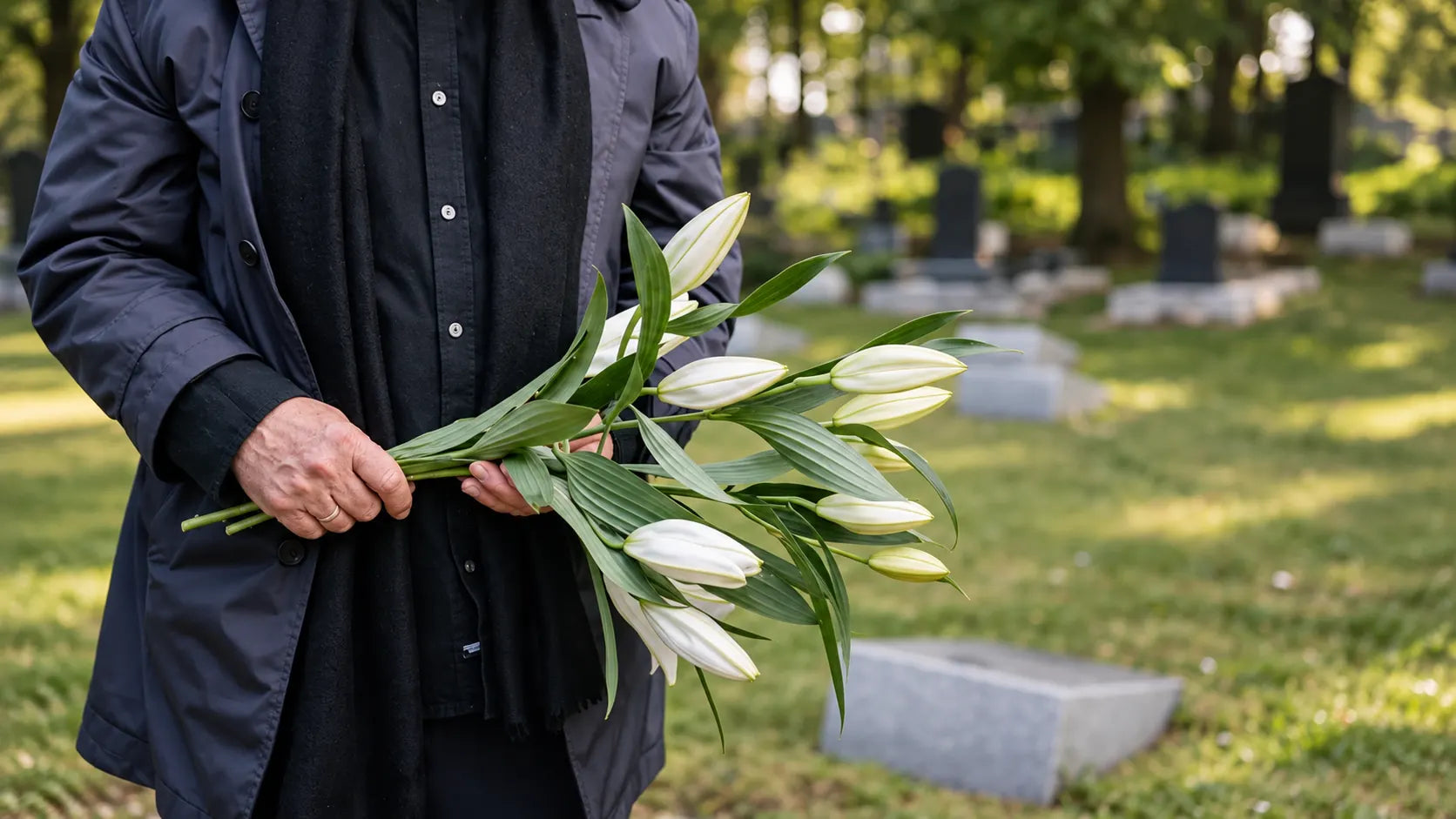
When someone you know loses a loved one, choosing what to send can feel difficult. You may want to acknowledge the loss without intruding, offer something beautiful without making it feel celebratory, and respect customs you do not know well. A thoughtful condolence gesture begins with the family's wishes, rather than with a particular flower or colour.
For anyone looking for condolence flowers in Dubai, that distinction matters (for additional guidance on thoughtful etiquette, see our overview of sympathy flower etiquette and delivery tips in Dubai). Families across the UAE have different religious traditions, personal preferences and arrangements for mourning. Flowers may be welcome at a home, church service or memorial, while another family may prefer practical help, food, charity or no gifts. The same design is not appropriate for every setting.
This guide explains how to make a sensitive choice, distinguish personal sympathy gifts from formal funeral tributes and plan a discreet delivery. Its floral suggestions are aesthetic guidance. Religious practice should be discussed with the family or their chosen religious adviser, and venue instructions should be confirmed before flowers are ordered.
Look first at any announcement the family has shared. It may name a charity, request no flowers or explain where condolences will be received. Follow those instructions even if sending flowers is customary in your own family. A gift should support the recipient's wishes, not require them to accommodate yours.
If there is no guidance, ask one trusted contact a brief question: “Would a small flower arrangement be welcome at home, or would practical support be more useful?” A relative, close friend or colleague coordinating messages may answer without involving the bereaved person in another decision. Avoid asking several family members the same question or requesting private details about the death.
You can also send a card or message first and decide about flowers later. Acknowledging the loss does not require an immediate purchase. If you know very little about the family's practice, a sincere note and an offer of specific help can be a considerate starting point.
In Muslim contexts, condolences, prayer and support for the bereaved family are central considerations. Preparing food for a bereaved household has a recognized basis in Islamic teaching. Egypt's Dar Al-Ifta discusses this in its guidance on offering food to the family of the deceased. This is a basis for practical support; it is not a reason to assume every household wants an unsolicited food delivery.
Coordinate food through someone who knows the family. Ask about dietary needs, how many people are present and when a delivery would help. The purpose is to reduce work, not to create an additional hosting task. Avoid requiring the bereaved family to receive a large gathering or return containers immediately.
Fresh flowers are not a required part of Muslim mourning observance, and preferences vary. Some families may welcome a discreet arrangement at home; others may consider it unnecessary or inappropriate. Do not describe white blooms as the universal Muslim condolence gift, or assume a floral tribute belongs at a mosque, burial or condolence gathering.
If a family has confirmed that flowers are welcome, a small white-and-green arrangement can be an understated design option. Its colour is an aesthetic choice, not a religious requirement. Keep the card and presentation modest, and confirm the receiving place through the family contact. For uncertainty about formal observance, ask the family or their religious adviser rather than expecting a florist to issue a religious ruling.
Flowers can form part of Christian funeral practices, but the details differ by denomination, congregation and family. The Church of England's funeral service guidance, for example, describes laying flowers on a coffin as a possible expression of sadness. This illustrates one tradition; it does not prescribe practice for every Christian service in Dubai.
Ask the family contact, funeral director or church coordinator whether floral tributes are being accepted. Confirm the type of arrangement, delivery location and latest arrival time. A family may request donations instead, prefer a particular flower, or limit tributes to close relatives. Those instructions matter more than a generic list of funeral flowers.
White lilies, orchids and restrained sympathy baskets are possible design choices when the family welcomes them. Their appropriateness depends on the setting and preferences, including fragrance. A large tribute designed for a service has different proportions and handling needs from a small arrangement delivered to a home. Religious shapes or symbols should be included only when requested and appropriate to that service.
If you are attending a memorial rather than the funeral itself, check its format. A remembrance gathering at a hotel, home or community venue may have its own plan for flowers and photographs. Do not assume a venue accepts deliveries simply because the event is a memorial.
“Expat” describes living outside one's country of origin; it does not identify a religion or a single set of funeral customs. Dubai expatriate families may be Muslim, Christian, Hindu, Buddhist, Jewish, secular or of mixed backgrounds. Individuals within the same community can also differ in what they find meaningful.
Use what the family has shared instead of drawing conclusions from nationality, a name or a language. If a ceremony includes unfamiliar customs, ask the coordinator what guests should bring, if anything. A home sympathy gift and a ceremonial offering may have different expectations, so clarify which one you intend.
Some families hold a local memorial while the funeral takes place elsewhere. Flowers sent to the Dubai home may be a personal gesture of care, while the family's formal rituals happen in another country. Check that someone will be home to receive them, particularly if relatives are travelling.
A sympathy gift goes to the living: it acknowledges the loss and expresses care for the person or household receiving it. It is often smaller and intended for a home surface. A bereavement bouquet can suit someone who enjoys arranging flowers, while a finished basket may be easier when they do not want another task.
A funeral tribute is designed for a particular ceremony, place and timing. It may need to match a church plan, fit a designated area or arrive before guests. Large wreaths, casket pieces and symbolic designs should be coordinated with the family and service organizer. Do not order a formal tribute simply because it appears more substantial than a home gift.
Tell Kinza Flowers the intended use before discussing stems or colours. “A small arrangement for the family home, with permission from their contact” is a different brief from “A tribute for a church service at a confirmed time.” The florist can advise on construction and presentation once the setting is clear.
Roses can create a compact focal point in an understated basket or bouquet. White and cream provide a quiet palette, while a flower in the person's favourite colour can make the gesture more personal if the family welcomes that approach. Avoid assigning a fixed spiritual meaning to the colour.
Ask about fragrance and available varieties. Some roses are more scented than others, and a small home arrangement should be comfortable to place in the recipient's space. Presentation can remain simple, without celebratory wording or oversized decorative ribbons.
White lilies are familiar in some sympathy and Christian funeral designs. Their large shape can give presence to a restrained arrangement, but certain varieties have a noticeable fragrance and visible pollen. Check the family's preferences rather than treating lilies as an automatic choice.
If the gift is going to a home with pets, mention this before ordering. Ask for the exact flower and foliage varieties and confirm their suitability with an authoritative veterinary resource (see our guide to pet-safe flowers regarding true lily toxicity in cats). The complete arrangement needs to fit the household, not just its focal flowers.
Cut orchid stems can create an elegant line without requiring a dense collection of flowers. They may suit a modern home arrangement or a formal design agreed with a service coordinator. Check the final height and width; a few stems can still spread widely.
A potted orchid is a different gift from a cut-flower arrangement. It involves longer-term care and may be welcome to one person but burdensome to another. Choose it only if you have a reason to think the recipient would appreciate caring for a plant.
Lisianthus and suitable smaller flowers can soften a design and connect focal blooms. A limited mix often feels calmer than a dense arrangement of many unrelated colours and shapes. Ask the florist for a tidy outline, modest scale and fragrance suited to the receiving household.
No flower needs to communicate a universal message on its own. The card supplies the meaning; the arrangement provides a considered visual gesture. Availability may affect exact stems, so specify which preferences matter and allow appropriate alternatives.
A Signature Basket can be useful because it arrives as a finished display. The recipient does not need to find a vase immediately, although the arrangement still needs its own care routine. Ask for the container footprint and total height, especially if the home already has several gifts or the family is receiving visitors.
A Signature Bouquet offers flexibility for someone who likes flowers in their own vase. Keep it easy to carry and avoid assuming they want to trim stems on arrival. If they may be travelling, delivering after their return could be more considerate than sending a large bunch now.
Subdued packaging can help the gift feel appropriate without making it austere. Avoid balloons, celebratory labels and highly theatrical finishing unless the family has requested a particular remembrance style. More expensive is not necessarily more thoughtful; ease of receiving and personal relevance matter.
A short message can be enough: “I am so sorry for your loss. Thinking of you and your family.” If you knew the person who died, one specific memory can add warmth: “I will always remember how warmly your mother welcomed us. Sending you all my love.” Keep it truthful and suited to your relationship.
Avoid telling the recipient how they should feel, promising that grief will pass quickly or comparing their loss with your own. Religious language should reflect what you know about the family's beliefs. If you are unsure, use plain words of sympathy rather than borrowing a prayer or phrase whose meaning you cannot explain.
For a colleague, keep the note personal but professional: “We are deeply sorry for your loss. Please know that your team is thinking of you.” Do not reveal details of the loss to other colleagues without permission. A card need not ask for a response; the recipient may not have the energy to acknowledge every message.
Coordinate through one family contact wherever possible. Confirm the address, receiving window and whether delivery should be discreet. For a Dubai apartment tower, include the building, unit, access procedure and a number reception or the driver can reach. For a villa, provide the villa number and entrance details. Avoid making the bereaved person handle repeated calls if someone else can help.
Check where the arrangement should go. A family home, condolence gathering and service venue are not interchangeable destinations. Do not send flowers to a mosque, cemetery or church without explicit permission and receiving instructions. If a venue accepts tributes, confirm who takes responsibility for them before and after the service.
Delivery timing should follow the family's circumstances rather than an arbitrary rule. An initial message can acknowledge the loss promptly, while a permitted flower gift may arrive later. If the household is away or already receiving many arrangements, ask whether a later delivery would be easier.
For requests outside Dubai, confirm service availability and the delivery plan with Kinza Flowers. Do not assume an advertised design includes transport to every emirate or access to a ceremony. For any destination, fresh flowers should be received indoors promptly rather than left at a door in UAE heat.
Respect the request directly. If a charity is named, use the details provided by the family rather than choosing a different cause in their name. A message of condolence can accompany your gesture without announcing an amount or expecting recognition.
Practical help can also be meaningful when welcomed. Offer one manageable action, such as arranging a meal at an agreed time or helping with a task you already know the family needs. Avoid a vague promise that leaves them responsible for deciding how you can help. Equally, accept that they may prefer privacy.
Do not send a “small” arrangement as an exception to a no-flowers request. The thoughtfulness lies in listening. Kinza Flowers can help with a floral gift when the family wants one; flowers do not need to be the answer to every condolence situation.
An adult should place the arrangement on a stable surface away from direct sun, heat and strong air-conditioning airflow. Keep it clear of crowded visitor routes. In a Dubai home with bright glass doors or windows, check whether sunlight reaches the display later in the day.
For a vase bouquet, use a clean vessel, remove submerged leaves and maintain fresh water. For a basket, follow instructions for its internal water source. Remove spent flowers and dropped foliage without needing to preserve the original design indefinitely. Our Flower Care guidance explains the practical routine.
A sympathy arrangement is a gesture of care, not a treatment or a measure of how deeply someone is grieving. Let the recipient enjoy, move or remove it according to their own needs.
Share the destination, the family's permission, the intended use, preferred palette, approximate size and any fragrance or pet restrictions. Include the card text, receiving contact and timing. You do not need to share private medical details or the circumstances of the death.
For example:
“The family has confirmed a small flower gift is welcome at their Dubai home. Please suggest an understated white-and-green basket with a manageable footprint. They prefer restrained fragrance. Their relatives will receive it tomorrow afternoon, and the card should say that we are thinking of them.”
Browse the Shop for formats, then Contact Us to discuss suitable availability and presentation. Confirm exact requirements for a ceremonial tribute through the family or service coordinator before placing the order.
Follow the family's wishes before choosing any sympathy flowers.
Distinguish Muslim practical-support traditions from optional personal floral gifts.
Coordinate Christian funeral tributes with the family and service organizer.
Choose a manageable arrangement by preference, space, fragrance and household needs.
Keep the card sincere and delivery discreet, with a clear receiving contact.
Ask first. Flowers are not a required mourning observance, and some families prefer practical support, food, prayer or no gifts. If the family welcomes a small home arrangement, keep it discreet. Do not assume it belongs at a mosque or burial.
No universal rule applies. White and cream are understated design options, but the family's preferences take priority. A favourite flower or colour may be appropriate when requested. Avoid treating colour choices as fixed religious requirements.
White lilies, roses, orchids and restrained arrangements are possible options, but confirm the family's wishes and the church or funeral coordinator's instructions. Some services accept tributes; others request donations or limit flowers. Religious shapes should be ordered only when appropriate and requested.
A basket arrives ready to display and can reduce the need to find a vase. A bouquet suits someone who enjoys arranging flowers. Choose a manageable size and consider whether the recipient is travelling or already receiving many gifts.
Use a brief, sincere message that acknowledges the loss and identifies the sender. A specific memory can be meaningful if you know the person. Avoid assumptions about beliefs, instructions about grief or an expectation of a reply.
Only after confirming permission, location, receiving contact and timing with the organizer. A formal tribute and a home sympathy gift have different handling needs. Check Kinza Flowers' availability for the destination and date before committing to a design.
Kinza Flowers creates considered floral gifts for families and personal occasions in Dubai. Explore the Shop, choose a Signature Basket, read Flower Care guidance, or Contact Us to discuss a sympathy arrangement that respects the family's wishes.



Subscribe to our newsletter

