Total: Dhs. 0.00
Taxes and shipping calculated at checkout


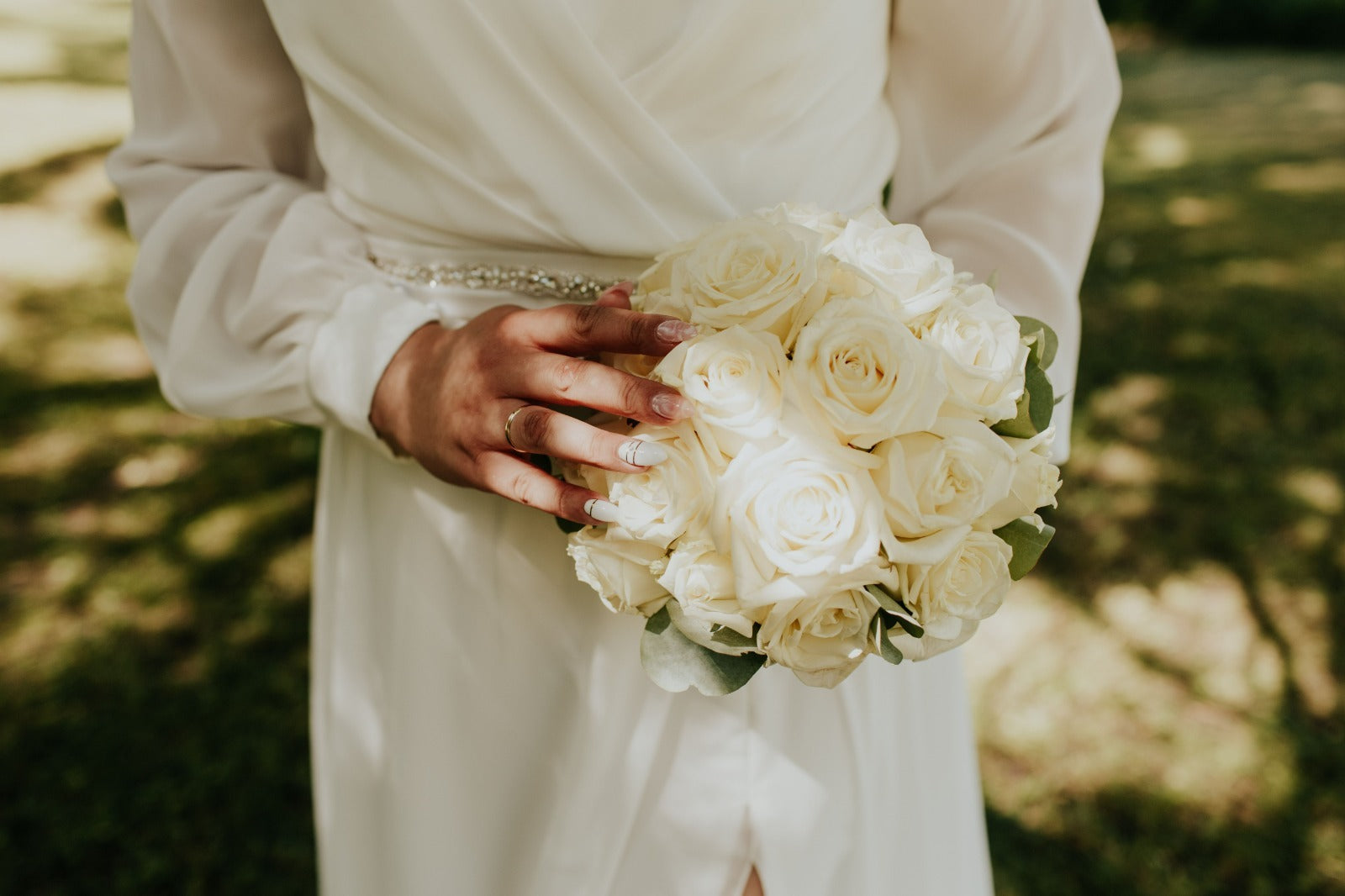
Your bridal bouquet is one of the most personal and visually significant details of your wedding day — it appears in nearly every photograph, complements your dress and overall look, and reflects your personal style in a way few other wedding elements do. With so many shapes, flower varieties, and colour combinations to choose from, narrowing down the right bouquet can feel like one of the more daunting parts of wedding floral planning.
This guide breaks down the major bridal bouquet shapes, popular flower choices, colour considerations, and practical factors to help you choose a bouquet that feels genuinely right for your wedding day.
Whether you already have a clear vision in mind or are still exploring your options, working through the shape, flower, and colour decisions one at a time — rather than trying to settle everything at once — often makes the process feel far more manageable.
Round bouquets offer a classic, timeless silhouette, with blooms arranged tightly together to form a full, symmetrical dome shape. This shape works well across nearly every wedding style, from traditional to modern, and tends to photograph particularly well thanks to its clean, balanced form.
Cascading bouquets feature flowers and greenery that trail downward, creating a dramatic, flowing effect well suited to formal or elaborate wedding styles. This shape adds significant visual impact and works especially well for a bride with a fuller ball gown or a more traditional, formal dress silhouette.
Hand-tied bouquets have a slightly looser, more natural appearance, with visible stems often wrapped in ribbon rather than fully concealed. This style suits a garden-inspired or rustic wedding aesthetic particularly well, offering a relaxed, effortless look that still feels intentional and polished.
Posy bouquets are smaller and more compact than a full round bouquet, offering an elegant, understated option well suited to a minimalist aesthetic or a smaller, more intimate wedding celebration.
Pageant or arm bouquets are long-stemmed arrangements carried in the crook of the arm rather than held in front with both hands, offering a distinctive, elegant alternative for a bride who wants a less traditional silhouette.
Nosegay bouquets sit between a posy and a full round bouquet in scale, offering a compact, tightly arranged shape that works particularly well for a bride who wants a defined, classic look without the fuller volume of a traditional round bouquet.
Beyond matching your dress and wedding aesthetic, your bouquet is also an opportunity to express something personal about you as a bride. Some brides choose to incorporate a meaningful flower — perhaps one connected to a family tradition or a special memory — into an otherwise classic design. Others prefer to let their bouquet reflect their everyday personal style, choosing a wilder, more textured hand-tied design if they gravitate toward a relaxed aesthetic in daily life, or a sleek, architectural round bouquet if their taste runs more polished and minimalist.
Thinking about your bouquet as an extension of your personal style, rather than purely as a wedding accessory, often leads to a choice that feels more authentically you when you look back on your photographs years later.
Garden roses offer a soft, romantic look with their full, layered petals, making them one of the most popular choices for bridal bouquets across a wide range of wedding styles.
Peonies bring a lush, romantic fullness to a bouquet, particularly popular for spring and early summer weddings, though their seasonal availability is worth discussing with your florist well in advance.
Ranunculus offer a delicate, layered look similar to peonies but often available across a wider range of the year, making them a popular alternative when peonies are out of season.
Orchids bring a more modern, sculptural quality to a bouquet, well suited to a contemporary or minimalist wedding aesthetic, and their long-lasting blooms hold up particularly well throughout a long wedding day.
Tropical blooms, such as anthuriums or birds of paradise, offer a bold, distinctive option for a bride seeking a striking, non-traditional bouquet, particularly well suited to a beach or resort wedding setting.
Greenery-forward bouquets, where foliage plays a starring rather than supporting role, have become increasingly popular for a more natural, textured aesthetic that pairs beautifully with a garden or outdoor wedding setting.
Your bouquet shape and size should generally complement rather than compete with your dress silhouette. A fuller ball gown often pairs well with a cascading or larger round bouquet, since the bouquet's scale matches the volume of the dress. A sleeker, more fitted dress silhouette often suits a smaller, more streamlined bouquet — a posy or a simple hand-tied design — that doesn't overwhelm the dress's clean lines.
It's also worth considering your dress's neckline and overall detailing when choosing a bouquet, since a heavily embellished dress may pair better with a simpler bouquet, while a more minimalist dress can support a fuller, more elaborate floral design without feeling visually overwhelming.
Your bouquet's colour palette typically draws from your overall wedding colour scheme, though it doesn't need to match exactly — many brides choose a bouquet in complementary or slightly varied tones that still feel cohesive with the broader palette. All-white or ivory bouquets remain a timeless, classic choice that pairs well with virtually any wedding colour scheme, while a bouquet incorporating soft blush, sage green, or deeper jewel tones can add a more distinctive, personalized touch.
If you're drawn to a particular colour but unsure how it will look in bouquet form, asking your florist for sample arrangements or reference photos during your consultation can help you visualize the final result before committing.
Bouquet size is worth thinking through practically as well as aesthetically, since you'll be carrying it throughout the ceremony, photos, and often parts of the reception as well. A very large or heavy bouquet can become tiring to hold over an extended period, particularly during a long ceremony or an extensive photography session. A moderate, well-proportioned bouquet that complements your dress without being unwieldy is generally the most practical choice for most brides.
It's also worth considering Dubai's climate specifically — if your wedding includes an outdoor component, choosing flowers known to hold up well in heat, and discussing hydration techniques with your florist, can help ensure your bouquet still looks fresh through photos and the ceremony itself.
As with other wedding florals, certain bouquet flowers are more readily available, and often more affordably priced, during specific seasons. If you have your heart set on a particular flower that isn't in season for your wedding date, your florist can often suggest a well-matched alternative that achieves a similar look and feel. Discussing this early in the planning process helps avoid last-minute substitutions or budget surprises closer to the wedding date.
Bringing reference images, fabric swatches from your dress, and any specific flowers you love to your florist consultation helps communicate your vision clearly. A good florist will also offer their own expertise at this stage, suggesting shapes, flowers, and colour combinations based on your dress, venue, and overall wedding aesthetic that you may not have considered on your own. Many florists also offer the option of a sample or mock-up bouquet ahead of the wedding day, giving you the chance to see and hold the design before finalizing it.
Many brides choose to preserve their bridal bouquet as a lasting keepsake once the wedding day is over, whether through pressing, air-drying, or professional preservation services that transform the bouquet into a framed display or a smaller decorative piece. If this interests you, it's worth discussing preservation options with your florist before the wedding, since certain methods require the flowers to be processed within a short window afterward, and some flower varieties preserve better than others.
Your bridal bouquet often sets the tone for smaller coordinating pieces, such as the groom's boutonniere, corsages for close family members, and sometimes even flower crowns or hair accessories for the bride or bridal party. Discussing these smaller pieces alongside your main bouquet during your florist consultation helps ensure the entire wedding party's florals feel visually connected, rather than being designed as separate, disconnected elements.
Round, cascading, hand-tied, and posy bouquets each suit different wedding styles and dress silhouettes.
Garden roses, peonies, ranunculus, and orchids are among the most popular bridal bouquet flowers.
Match your bouquet's scale and shape to your dress silhouette for the most cohesive overall look.
Consider practicality alongside aesthetics, especially for a bouquet you'll carry throughout a long wedding day.
Discuss seasonality and Dubai's climate with your florist to ensure your chosen flowers hold up well on the day.
A cascading or fuller round bouquet often complements a ball gown's volume best, matching the overall scale of the dress.
Orchids and certain tropical blooms tend to hold up particularly well in heat; your florist can recommend the best options and hydration techniques for your specific wedding date and venue.
Not necessarily — many brides choose complementary or slightly varied tones that still feel cohesive with the overall wedding palette rather than an exact match.
It's best to finalize your bouquet design at least a few months before the wedding, particularly if your flower choices are seasonal or if you'd like a sample arrangement made in advance.
Many florists offer this option, particularly for larger weddings, allowing you to see and hold the design before it's finalized.
Kinza Flowers works closely with brides across Dubai to design bridal bouquets tailored to their dress, venue, and personal style. Explore our Events services, browse our Shop, learn more About Us, or get in touch via our Contact Us page to schedule a bridal bouquet consultation.

Subscribe to our newsletter

