Total: Dhs. 0.00
Taxes and shipping calculated at checkout


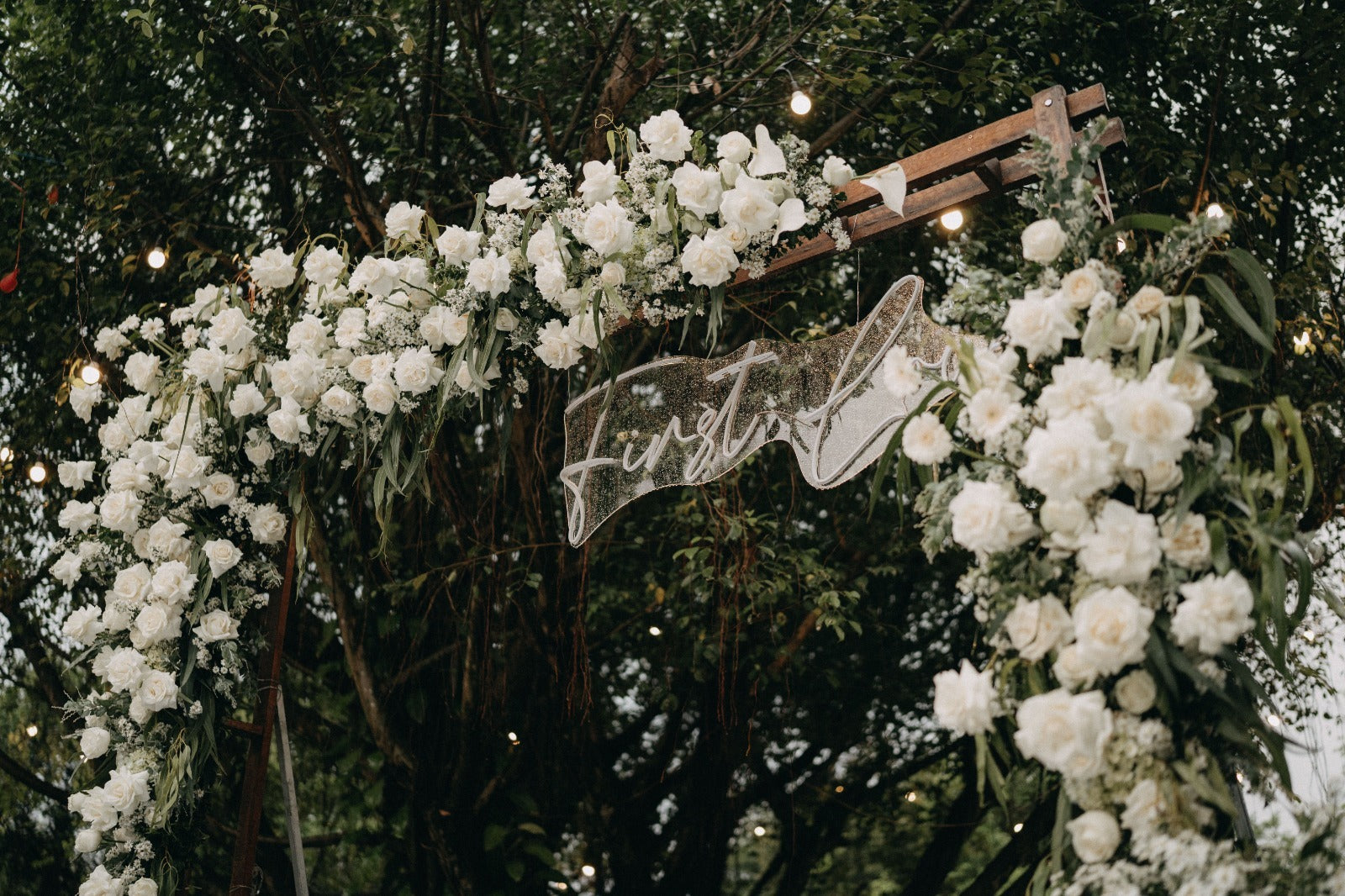
Flowers play a central role in setting the tone of a wedding, shaping everything from the first impression guests get walking into a venue to the intimate details captured in a couple's most treasured photographs. With so many decisions to make — bouquets, ceremony arrangements, centerpieces, colour palettes, and more — wedding floral planning can feel overwhelming without a clear starting point.
This guide walks through the major elements of wedding floral planning in Dubai, covering bridal bouquets, ceremony and reception flowers, centerpieces, colour palette selection, seasonality, and how to budget for wedding florals thoughtfully.
Whether you're planning an intimate ceremony or a large-scale celebration, the same fundamental planning process applies: start early, communicate your vision clearly, and work with a florist who understands how to translate that vision into a cohesive floral scheme across every part of the day.
Flowers do more than decorate a wedding — they help tell the story of the day, tying together the venue, the colour scheme, and the overall mood the couple wants to create. A well-planned floral scheme creates a cohesive visual thread from the bridal bouquet through the ceremony backdrop and into the reception centerpieces, giving the entire event a sense of intentional design rather than a collection of separate decisions.
Because flowers also feature so prominently in wedding photography, they carry lasting significance well beyond the day itself, appearing in images a couple will look back on for years to come. In Dubai specifically, where weddings often blend a wide range of cultural traditions and venue styles — from beachfront resorts to grand ballrooms and desert-inspired settings — floral design also plays a key role in tailoring the celebration's atmosphere to the couple's specific cultural and personal vision.
Beyond the bride's own bouquet, most weddings include flowers for the wider bridal party — bridesmaid bouquets, boutonnieres for the groom and groomsmen, and often corsages for close family members such as mothers and grandmothers. These smaller arrangements are typically designed to complement the bridal bouquet, using a similar colour palette or flower selection at a smaller scale, creating visual cohesion throughout the wedding party's photographs.
Boutonnieres are generally kept simple, often featuring a single bloom or a small cluster of flowers that echoes the overall floral scheme, while bridesmaid bouquets can either closely match the bridal bouquet or offer a slightly simplified variation, depending on the couple's preference.
Most florists recommend beginning wedding floral planning several months in advance, particularly for a larger celebration or a wedding during a popular season, when demand for both flowers and florist availability tends to increase. An initial consultation is usually the best starting point, allowing the couple to share their venue details, colour palette, overall aesthetic, and budget so the florist can put together a proposal tailored to their specific vision.
During this consultation, it's worth bringing any inspiration images, fabric swatches, or venue photos that help communicate the desired aesthetic, since visual references often communicate a vision more effectively than descriptions alone. A good florist will also walk you through their portfolio and process at this stage, giving you a clearer sense of their style and experience with weddings similar in scale or aesthetic to yours.
The bridal bouquet is often considered the centerpiece of a wedding's floral design, and its shape, size, and flower selection should generally complement both the bride's dress silhouette and the overall wedding aesthetic. Round, hand-tied bouquets offer a classic, timeless look, while cascading bouquets bring a more dramatic, romantic effect well suited to a formal or traditional wedding. A simpler posy bouquet suits a more minimalist aesthetic or a smaller, more intimate celebration.
Flower choice matters as much as shape — garden roses, peonies, and ranunculus offer a soft, romantic look, while orchids and tropical blooms bring a more modern, striking aesthetic. The right choice ultimately depends on matching the bouquet to the bride's personal style and the wedding's overall design direction.
Ceremony flowers set the tone for the moment the couple exchanges vows, and typically include elements like an arch or backdrop arrangement, aisle decor, and any flowers used for seating or welcome displays. A floral arch or backdrop tends to be one of the more visually significant investments in ceremony decor, since it frames the couple throughout the ceremony and features prominently in photographs.
Aisle decor can range from simple petal-lined pathways to more elaborate floral installations at each row, depending on budget and the overall scale of the celebration. Many couples also choose to repurpose ceremony flowers — such as arch arrangements — for the reception space afterward, which can be a practical way to maximize the value of a larger floral investment.
Reception centerpieces are one of the most visible and numerous floral elements at a wedding, appearing on every guest table throughout the event. Centerpiece styles range from tall, dramatic arrangements that create height and visual impact in a room, to low, garden-style arrangements that encourage easier conversation across the table.
The right centerpiece style often depends on the venue's ceiling height and overall room proportions — a tall arrangement can feel appropriately grand in a large ballroom, while a lower, more intimate arrangement often suits a smaller or more relaxed venue better. Many couples also choose to vary centerpiece heights and styles across different tables to add visual interest throughout the reception space, rather than repeating a single design at every table.
A wedding's colour palette typically flows from the overall wedding theme, the season, and the couple's personal preferences, and the floral scheme should generally complement rather than compete with the venue's existing colours and the wedding party's attire. Soft, romantic palettes in blush, ivory, and sage green remain a popular, timeless choice, while bolder palettes incorporating jewel tones or vibrant colours can create a more dramatic, memorable aesthetic.
It's worth discussing your colour palette in detail with your florist early in the planning process, since certain colours and specific flower varieties are more reliably available during certain seasons, which can affect both the final look and the overall cost of the floral plan.
Seasonality plays a meaningful role in wedding floral planning, affecting both the availability and cost of specific flower varieties. Certain blooms are more reliably available, and often more affordably priced, during particular times of year, while out-of-season varieties may need to be sourced internationally, which can affect both cost and lead time. Discussing seasonality with your florist early in the planning process helps ensure your vision is both achievable and realistically budgeted, and a good florist can often suggest excellent seasonal alternatives that achieve a similar aesthetic at a more accessible price point.
Wedding floral budgets can vary enormously depending on the scale of the celebration, the specific flowers chosen, and the number of floral elements involved — from the bridal party's bouquets through ceremony decor and every reception centerpiece. As a general guide, couples often allocate their floral budget across a few major categories: bridal party flowers (bouquets and boutonnieres), ceremony decor, and reception centerpieces, with ceremony and reception decor typically representing the largest portion of the total floral spend given how many individual pieces are involved.
Being upfront about your total budget during your initial florist consultation is one of the most useful things you can do, since an experienced florist can then help prioritize which floral elements will have the greatest visual impact within that budget, rather than spreading the budget too thinly across every possible element.
A good wedding florist will typically walk you through several stages: an initial consultation, a detailed proposal outlining specific flowers, quantities, and pricing, and often a mock-up or sample arrangement ahead of the wedding day itself for larger celebrations. Clear communication throughout this process — including sharing updated guest counts, venue details, or design changes as they arise — helps ensure the final floral plan matches your vision as closely as possible.
It's also worth discussing delivery and setup logistics well in advance, including timing for ceremony and reception setup, since these details are just as important to the final result as the flower selection itself.
Many couples today are also thinking about the sustainability of their floral choices, whether that means favouring seasonal, locally available blooms over imported varieties, choosing a florist who minimizes floral foam use, or planning for flowers to be repurposed or donated after the event rather than discarded. Raising these preferences with your florist during the initial consultation allows them to factor sustainable choices into the overall floral plan from the outset, rather than as an afterthought.
Many couples choose to preserve elements of their wedding flowers as a lasting keepsake, whether through pressing, drying, or professional preservation services that can transform a bridal bouquet into a framed piece or a smaller decorative memento. If this is something you're interested in, it's worth discussing the process with your florist or a specialist preservation service well before the big day, since some preservation methods require flowers to be handled and processed within a short window after the wedding itself.
Wedding floral planning benefits from starting several months in advance, particularly for larger celebrations.
Bridal bouquet shape and flower choice should complement both the dress and overall wedding aesthetic.
Ceremony and reception flowers can often be thoughtfully repurposed to maximize floral investment.
Seasonality affects both flower availability and cost, so discuss this with your florist early.
Being upfront about your total budget helps your florist prioritize the floral elements with the greatest visual impact.
It's generally recommended to book several months in advance, particularly for larger weddings or during popular wedding seasons, to ensure your preferred florist and flower choices are available.
Ceremony decor and reception centerpieces typically represent the largest portion of a wedding floral budget, given the number of individual pieces and the scale involved compared to bridal party flowers alone.
Yes, many couples repurpose ceremony arrangements, such as arch or backdrop flowers, for the reception space, which can be a practical way to maximize the value of a larger floral investment.
Yes, certain flowers are more readily available and affordably priced during specific seasons; your florist can help you choose in-season options or well-matched alternatives that fit your vision and budget.
Yes, an initial consultation helps the florist understand your venue, colour palette, and budget, and allows you to review their portfolio and process before committing.
Kinza Flowers offers comprehensive wedding floral planning, from bridal bouquets to full ceremony and reception decor, tailored to each couple's vision and budget. Explore our Events services, browse our Shop, learn more About Us, or get in touch via our Contact Us page to schedule a wedding floral consultation.

Subscribe to our newsletter

