Total: Dhs. 0.00
Taxes and shipping calculated at checkout


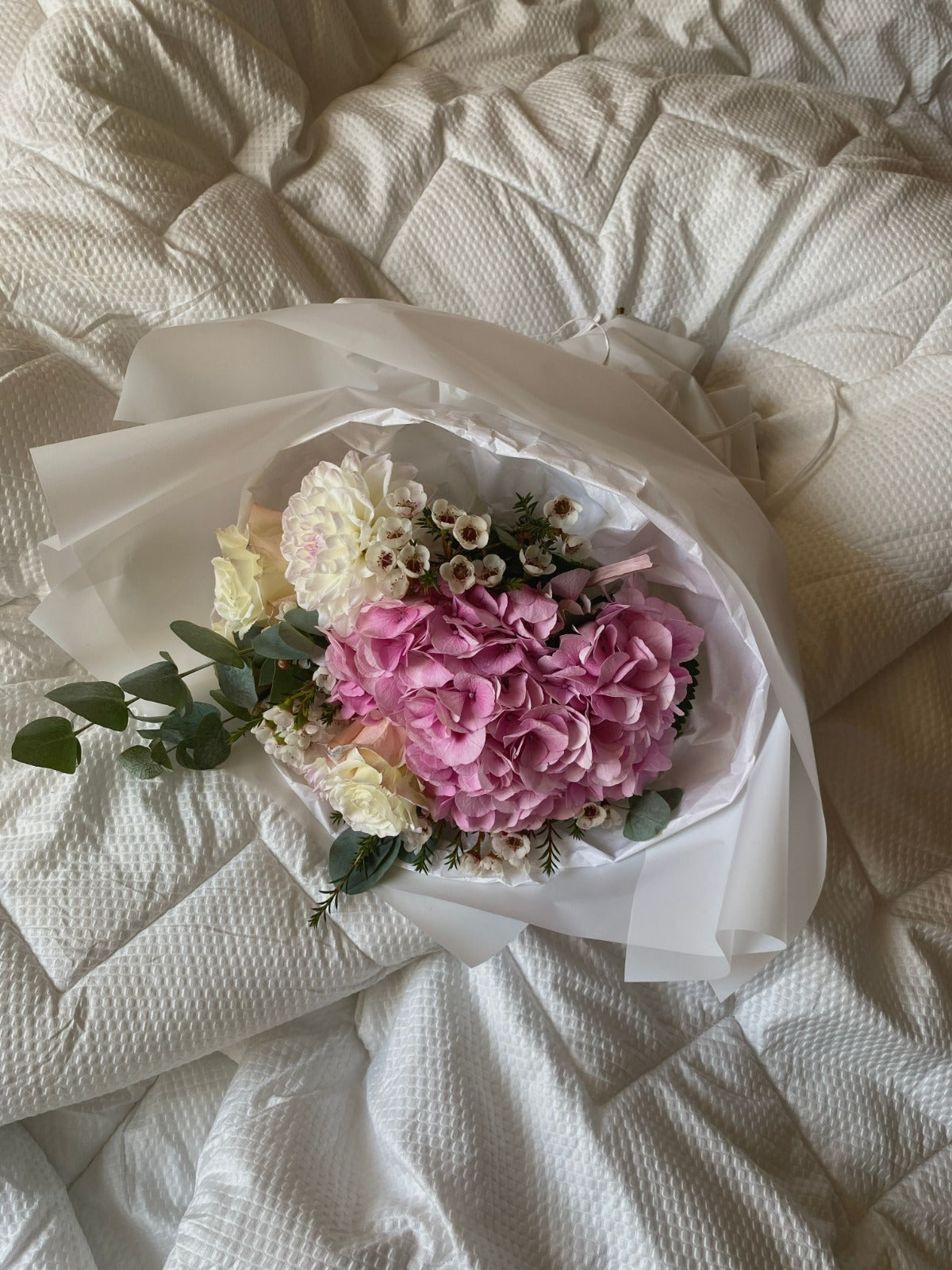
Hydrangeas are one of the most recognizable flowers in floral design, known for their large, rounded clusters made up of dozens of individual small blooms. That fullness is exactly what makes a single hydrangea stem capable of anchoring an entire arrangement, giving florists a lot of visual impact from relatively few stems.
Botanically, hydrangeas belong to the genus Hydrangea, with Hydrangea macrophylla being the most common variety used in cut-flower arrangements and gifting. One of the most distinctive things about hydrangeas is that their colour isn't fixed the way it is in most flowers - soil pH and specific growing conditions can shift blue hydrangeas toward pink and vice versa, which is part of why the same variety can show up in such different colours depending on where and how it was grown.
This guide covers what hydrangeas symbolize, what their different colours represent, how to keep them fresh and which occasions suit a hydrangea gift particularly well.
Whether you're choosing hydrangeas for the first time or simply want to understand why the same flower can look so different from one bouquet to the next, the goal here is to give you a practical, confident starting point rather than an exhaustive botanical reference.
Hydrangeas belong to the genus Hydrangea, a group of flowering shrubs native to Asia and the Americas, with Hydrangea macrophylla - sometimes called the bigleaf or mophead hydrangea - being the variety most commonly grown for cut-flower use. Each "bloom" is technically a dense cluster, or inflorescence, made up of many small individual flowers packed tightly together, which is what gives hydrangeas their signature full, rounded silhouette.
This clustered structure is also why a single hydrangea stem can look so substantial in an arrangement compared to a single rose or tulip stem - florists often use hydrangeas as a base or filler layer precisely because a few stems can fill out a bouquet's shape and volume more efficiently than most other flowers.
Hydrangeas are generally associated with heartfelt emotion, gratitude and genuine understanding between people. Because a single hydrangea bloom is actually made up of many small flowers clustered together, some interpretations also link the flower to unity, abundance and heartfelt connection between a group of people, not just a single relationship.
The exact symbolic meaning of hydrangeas has varied somewhat across different periods and regions, so it's worth treating this as a general, widely recognized association rather than a single, universally fixed rule - much like most flower symbolism, it works best as a starting point rather than a strict code.
In some historical contexts, hydrangeas have also been associated with a more cautionary meaning - a reminder to be genuine and heartfelt rather than boastful - though this older interpretation has largely faded from everyday gifting culture in favour of the warmer, more straightforward associations of gratitude and connection used today.
Blue hydrangeas are often associated with a deeper, more sincere expression of gratitude and understanding. Their cooler, calming tone also fits well with reflective or heartfelt gifting occasions and their relatively unusual colouring among cut flowers makes them a naturally distinctive gift.
Pink hydrangeas lean toward warmth, genuine emotion and heartfelt affection, offering a softer, more approachable alternative to blue while retaining the same fuller, romantic hydrangea silhouette. Pink hydrangeas have become an especially popular choice for romantic and celebratory gifting where a fuller, more textured bouquet is preferred over a tighter, more classic arrangement.
White hydrangeas, a third common option, carry the same general association with purity and grace found across most white flowers, making them a versatile choice for both celebratory and more formal occasions. Purple hydrangeas, sitting between blue and pink on the colour spectrum, are sometimes associated with a deeper sense of understanding and abundance and tend to read as slightly more dramatic or statement-making than the more common blue and pink varieties.
Unlike most cut flowers, hydrangea colour isn't fixed purely by variety - it's also shaped by the soil conditions the plant was grown in. More acidic soil, which allows the plant to absorb more aluminum, tends to produce bluer blooms, while more alkaline soil produces pinker tones. This means two hydrangea plants of the exact same variety can produce noticeably different coloured blooms depending entirely on where and how they were grown, which is part of what makes hydrangea colour genuinely fascinating from a botanical standpoint.
Hydrangeas have a reputation for being slightly more demanding as cut flowers than some other popular varieties, mostly because their large blooms require more water uptake than a typical stem provides on its own. A few specific habits make a meaningful difference to their vase life.
As soon as your hydrangeas arrive, trim the stems at an angle and place them immediately in room-temperature water. Because hydrangea blooms are unusually thirsty, a useful trick is to fully submerge the flower head in cool water for a few minutes if it begins to droop - this allows the petals themselves to absorb moisture directly, in addition to what the stem takes up. Change the water every one to two days and keep the arrangement away from direct sun and heat, which will cause the large blooms to wilt more quickly than smaller, hardier flowers.
In Dubai's climate specifically, hydrangeas benefit from being kept well away from air-conditioning vents, since the constant dry airflow can dehydrate their large petal surface area faster than most other cut flowers.
Beyond basic watering, a few additional techniques can help hydrangeas last longer. Some growers recommend re-cutting the stem end at a sharp angle and lightly scoring or splitting the last inch of the stem vertically, which increases the surface area available for water absorption - hydrangea stems are notably woodier than most flower stems, so they don't always take up water as efficiently through a simple flat or diagonal cut alone. Using flower food, or a small amount of sugar in the vase water, can also support a hydrangea's unusually high water demand over the course of its vase life.
It's also worth checking your hydrangea daily rather than every few days, since their large blooms can go from healthy to visibly wilting faster than most other cut flowers if the water level drops too low or the stem's water uptake becomes blocked by an air bubble.
Hydrangeas suit a wide range of occasions thanks to their fuller, more textural presence in an arrangement. They work particularly well for anniversaries and thank-you gestures, where their symbolism of heartfelt gratitude and genuine emotion fits naturally and they're increasingly popular for wedding florals thanks to their lush, romantic volume. Hydrangeas also make an elegant home décor choice, since a single stem or two can fill a vase with striking visual presence.
For a milestone anniversary specifically, a mixed arrangement combining hydrangeas with garden roses or peonies offers a fuller, more luxurious presentation than either flower alone, while a simple, single-variety hydrangea bouquet works beautifully as an elegant, understated gift for a thank-you gesture or a housewarming.
Hydrangeas also pair particularly well with our Signature Bouquet styling, where their volume and texture provide an excellent base for a fuller, more layered arrangement. For weddings specifically, hydrangeas are frequently used in both bridal bouquets and larger installations like ceremony arches during wedding florals, given how efficiently a relatively small number of stems can fill a large visual space.
Hydrangeas pair especially well with roses, peonies and eucalyptus greenery, all of which complement their rounded shape with either a contrasting bloom structure or a softening, textural element. When paired with roses specifically, hydrangeas are often used as a supporting "base" layer that gives the arrangement its overall shape and volume, while the roses serve as the visual focal point.
Heartfelt Symbolism: Hydrangeas symbolize heartfelt emotion, gratitude and genuine understanding.
Color Meanings: Blue hydrangeas lean toward sincere, reflective gratitude; pink toward warmth and affection.
Botanical Shifts: A hydrangea's colour can shift based on soil pH and growing conditions, even within the same variety.
Hydration Demands: Hydrangeas need more water than average cut flowers; submerging drooping blooms can help revive them.
Versatile Gifting: Best suited for anniversaries, thank-you gifts, weddings and elegant home décor.
Hydrangea colour, particularly in blue and pink varieties, is influenced by soil pH during growth, which affects how the plant absorbs aluminum - more acidic soil tends to produce bluer blooms, while more alkaline soil produces pinker tones.
With proper care, hydrangeas generally last about five to seven days in a vase, somewhat shorter than hardier flowers like carnations, given their large, water-intensive blooms.
Drooping is usually a sign of dehydration; submerging the bloom itself briefly in cool water, in addition to normal stem watering, often helps revive a wilting hydrangea.
Yes, hydrangeas are increasingly popular in wedding florals thanks to their full, romantic volume and they pair well with roses, peonies and greenery for a lush, textured look.
Hydrangea colour is determined largely by the soil conditions during growth, particularly soil pH and aluminum availability, so it isn't something that can be meaningfully changed once a stem has already been cut - colour choice is best made at the point of purchase.
Most common hydrangea varieties have little to no noticeable fragrance, which makes them a good choice for anyone sensitive to strongly scented flowers, or for pairing with other, more fragrant blooms without the scents competing.
Kinza Flowers offers fresh hydrangea arrangements alongside our full seasonal collection, sourced for both colour vibrancy and long-lasting quality. Browse our Shop, see our Flower Care guide for more general tips, or get in touch via our Contact Us page for a custom hydrangea arrangement.

Subscribe to our newsletter

